Winter can feel like a tricky season for families who want to eat fresh, nutritious produce while staying eco-friendly. The colder months often mean shorter days, less sunlight, and fewer options at the grocery store. For many parents, this can feel overwhelming: How do you plan meals that are healthy, low-waste, and appealing to kids when it’s gray outside and the fridge feels empty?
Over the years, I’ve learned that focusing on seasonal, sustainable winter produce and simple storage strategies not only makes meals healthier but also helps reduce waste and save money. My family has discovered that even small changes—like batch cooking with root vegetables or swapping single-use produce bags for reusable ones—can make a big difference. This guide will walk you through the best winter produce for families, how to store it for freshness, and easy meal ideas that kids will love.
Why Eating Seasonal Produce Matters in Winter
Eating seasonal winter produce is about more than just flavor. Fruits and vegetables harvested in season are often more nutrient-dense and environmentally friendly. Local winter produce travels shorter distances from farm to table, reducing your carbon footprint. For families, seasonal eating also tends to be more budget-friendly.
When my daughter was around two, she refused anything that didn’t look bright and fresh. By choosing winter fruits like citrus and apples and vegetables like carrots, squash, and kale, I noticed she was more willing to eat at least one or two pieces each day. Seasonal produce doesn’t just taste better; it naturally encourages variety and balance in a family diet.
Check out my Seasonal Produce Shopping Guide to ensure you’re getting the freshest fruits and veggies all year round!
Best Winter Produce for Families
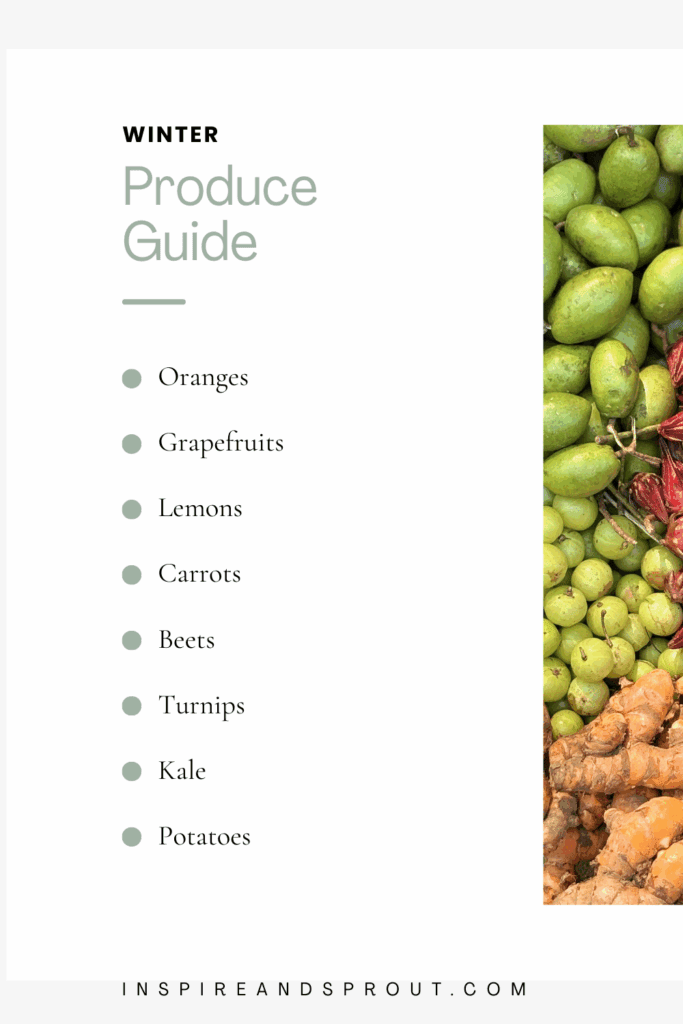
Here’s a handy list of nutrient-rich, seasonal produce that works well in winter meals for toddlers and older kids:
Fruits
- Apples
- Pears
- Citrus (oranges, tangerines, grapefruits)
- Pomegranates
- Persimmons
- Kiwi
Vegetables
- Root vegetables: carrots, beets, parsnips, turnips
- Cruciferous: broccoli, cauliflower, Brussels sprouts
- Leafy greens: kale, Swiss chard, spinach
- Winter squash: butternut, acorn, spaghetti squash
- Leeks and onions
One tip I’ve learned is to rotate produce each week. This keeps meals interesting for kids and ensures a variety of nutrients. For example, one week we focus on sweet root vegetables and citrus, and the next week we feature squash and leafy greens. My daughter even started picking her favorite colors from the store herself, making grocery shopping feel like a mini mindful activity.
Check out the USDA’s seasonal produce chart for even more grocery store inspiration this winter.
How to Store Winter Produce for Maximum Freshness
Winter produce tends to last longer than summer fruits, but without proper storage, it can still go bad. Here are easy, sustainable storage tips:
Root Vegetables
- Keep in a cool, dark place or the fridge’s vegetable drawer.
- Store carrots in a container of water to keep them crisp longer.
Leafy Greens
- Wash, dry thoroughly, and store in reusable produce bags or containers with a paper towel to absorb excess moisture.
- Spinach and kale can last up to a week this way.
Citrus and Apples
- Store at room temperature for a few days, then move to the fridge for longer freshness.
Winter Squash
- Store whole, uncut squash in a cool, dry pantry.
- Once cut, wrap tightly and refrigerate; roast leftovers within a few days.
One winter, I tried storing carrots and parsnips loosely in the fridge drawer. By midweek, half had shriveled, which was frustrating. Switching to water-filled containers and reusable produce bags not only saved money but also cut down on waste and frustration.
Check out my Produce Storage Guide to always know the proper way to store all of your fruits and vegetables!
Simple Meal Ideas Using Winter Produce
Even in winter, it’s possible to make meals that are nutritious, low-waste, and kid-approved. Here are some of our family favorites:
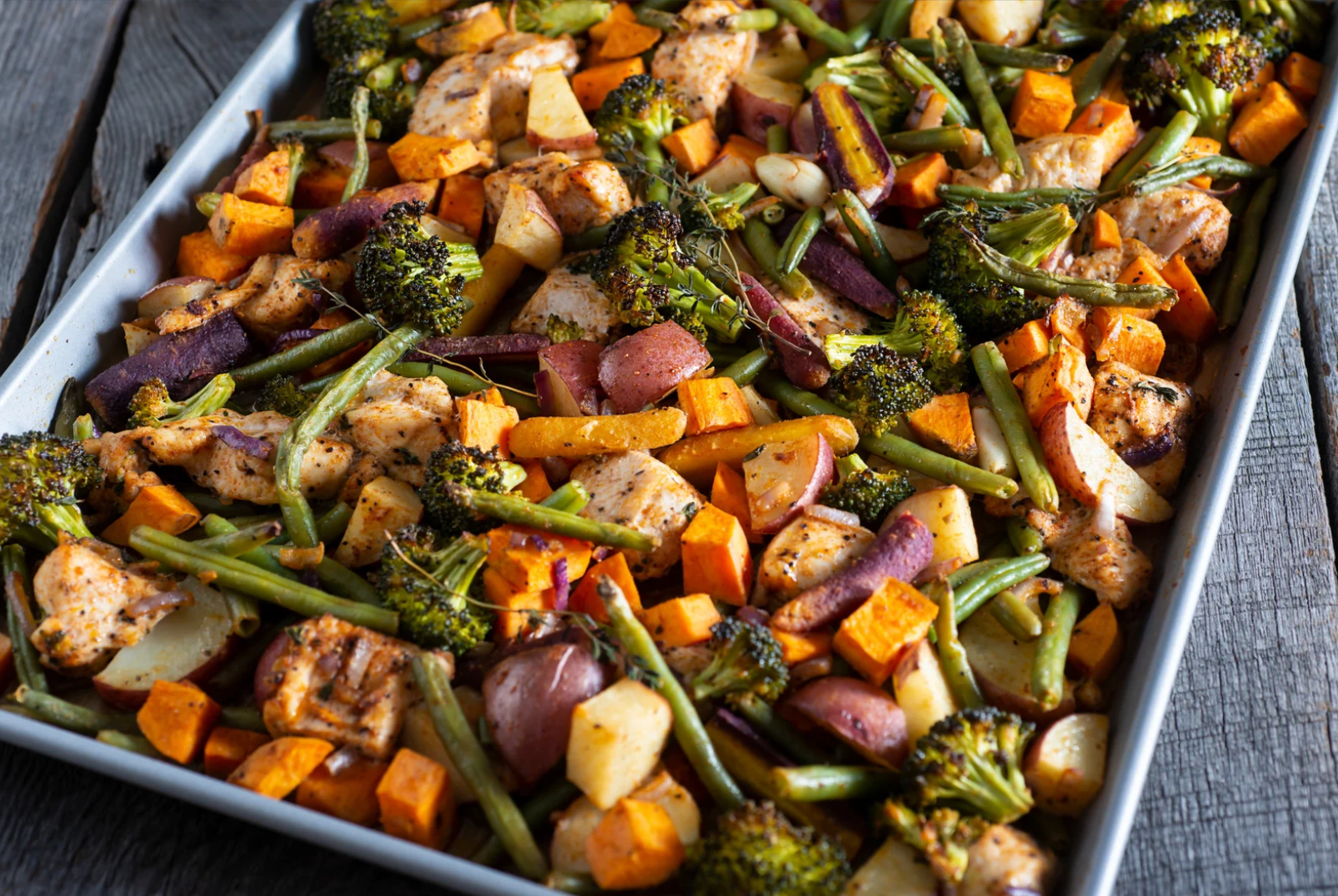
1. Root Vegetable Sheet Pan Dinner
- Carrots, parsnips, and sweet potatoes tossed in olive oil and roasted.
- Add a sprinkle of rosemary or thyme for flavor.
- Serve alongside baked chicken or beans for protein.
Tip: Roast extras and save for lunches or quick dinners. My daughter loves nibbling on roasted carrots straight from the pan—sometimes skipping dinner entirely!
2. Winter Citrus Salad
- Combine oranges, pomegranate seeds, and sliced kiwi.
- Add a small drizzle of honey and a pinch of cinnamon for warmth.
- A perfect side dish or snack that’s visually fun for kids.
3. Simple Kale and Squash Soup
- Sauté onions and leeks, add cubed butternut squash and vegetable broth.
- Simmer until soft, then blend until smooth.
- Stir in chopped kale just before serving to retain nutrients.
4. Kid-Friendly Veggie Snacks
- Sliced bell peppers, cucumbers, or carrot sticks served with hummus or yogurt dip.
- Small containers in the fridge make it easy for toddlers to grab and go.
5. Smoothies for Energy
- Spinach or kale, banana, apple, and a squeeze of citrus.
- Add water or oat milk for a creamy texture.
- A great breakfast or mid-morning snack that sneaks in leafy greens.
Zero-Waste and Sustainable Practices in Winter
Eating seasonal produce is just one step toward sustainable winter living. Here are additional low-waste tips we practice:
- Reusable Produce Bags: Swap single-use plastic for cloth or mesh bags.
- Batch Cooking: Roast vegetables or prep fruit for the week.
- Composting: Collect peelings and cores in a small compost bin.
- Leftover Creativity: Use vegetable scraps for soups or stock.
One personal story: I used to toss onion skins, carrot tops, and squash seeds after cooking. Once I started making veggie stock with scraps, we had a delicious, zero-waste broth every week, and my daughter loved helping stir the pot—an easy introduction to sustainable habits.
For a more in-depth guide to all things eco-friendly, try my Eco-Friendly Family Starter Kit to get all you need for a more sustainable lifestyle.

Tips for Involving Kids in Winter Meals
Getting kids involved with winter produce helps them try new flavors and fosters mindfulness in eating:
- Grocery Store “Color Hunt” – Have them pick a fruit or veggie of each color.
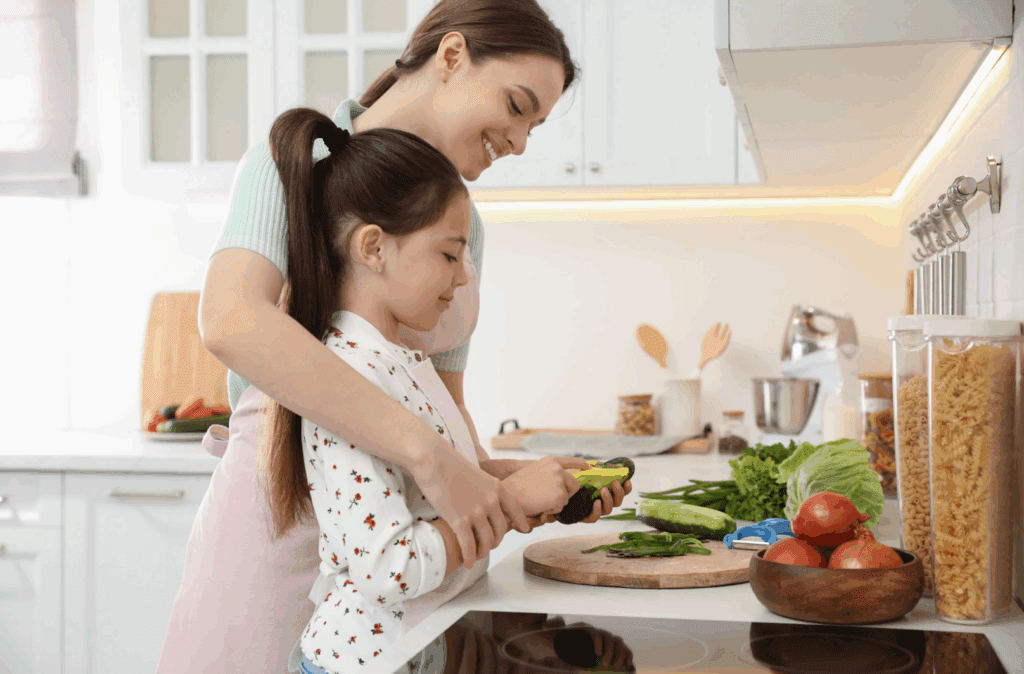
- Wash and Prep Together – Toddlers can rinse greens or peel apples safely.
- Name Your Veggies – Give fun names to vegetables, like “orange sticks” or “green trees.”
- Tasting Games – Try one new fruit or vegetable each week and vote on favorites.
Involving my daughter in weekly meal prep made her more likely to try roasted squash or kale chips—foods she used to avoid completely.
For many more ideas for activities together with your little ones and connecting long term, my Mindful Parenting Challenge is for you!
Conclusion
Winter doesn’t have to mean boring meals or produce burnout. By focusing on seasonal winter produce, storing it mindfully, and involving your kids in meal prep, families can enjoy healthy, eco-friendly meals while reducing waste. Whether it’s a roasted root vegetable sheet pan dinner, a bright citrus salad, or a kid-friendly smoothie, there are countless ways to make winter meals fun, nourishing, and sustainable.
With small, intentional shifts in shopping, cooking, and storage, your family can embrace the flavors of winter while supporting a healthier planet and a calmer, happier home.
Check out these related posts and resources to help you on your mindful and sustainable journey:

Hi, I’m Christine — a nature-loving mom on a journey to live more sustainably and mindfully.
Through the ups and downs of parenting, I’ve found peace in mindfulness, meditation, and conscious living. Now, I share simple tips for mindful parenting, sustainable choices, and creating a sense of calm in everyday family life.
No responses yet