
Creating a calm home doesn’t require a shopping spree, a minimalist makeover, or perfectly curated spaces. In fact, some of the most peaceful homes aren’t defined by what they contain, but by what they don’t.
For a long time, I believed calm was something I could purchase: a new basket, a better organizer, a candle promising relaxation. While those things can be nice, they never created lasting peace. What finally made a difference was learning how to work with my space instead of constantly trying to improve it with more stuff.
If you’re craving a home that feels calmer, softer, and more grounded (without spending money or adding clutter) this guide will walk you through practical, realistic shifts you can make using what you already have.
Why Buying Less Can Actually Create More Calm
Our homes constantly communicate with our nervous systems. Every object we see asks something of us: to notice it, clean it, move it, or remember why it’s there. When there’s too much visual and mental input, our bodies stay subtly alert, even when we’re trying to rest.
Buying new items often creates a short burst of relief, followed by more responsibility. More things mean more decisions, more maintenance, and more visual noise. Over time, this can quietly increase stress rather than reduce it.
When we remove excess instead of adding more, we give our minds space to breathe. Calm doesn’t come from having the “right” things, it comes from having fewer demands placed on our attention.

1. Start With One Small “Quiet Zone”
Trying to calm your entire home at once can feel overwhelming and unrealistic, especially if you’re parenting or juggling a busy schedule. A much gentler approach is to begin with a single, contained space.
Choose a small area you interact with daily, such as a kitchen counter corner, a bedside table, or the entryway. Clear everything off completely, then pause before adding anything back. This moment of emptiness is important. It helps you notice how much visual calm comes from less.
Once the surface is clear, intentionally return only the items that truly belong there and serve a clear purpose.
Examples of quiet zones include:
- A kitchen counter with only a coffee maker and fruit bowl
- A bedside table with a lamp and one book
- An entryway surface with keys and a small dish
I started with our kitchen counter: the place where mail, toys, and random items constantly piled up. Clearing it felt strange at first, but within a week it became the calmest and most grounding spot in our home.
Check out my post on Mindful Frugality or Low-Waste Habits That Actually Save Money.
2. Reduce Visual Clutter (Not Your Personality)
Creating calm doesn’t mean stripping your home of warmth, color, or personality. It simply means being intentional about what you allow to stay visible.
When too many items compete for attention, our eyes never get a place to rest. This can create a subtle sense of unease, even if everything is technically “organized.” Visual calm comes from spacing, grouping, and restraint, not perfection.
Instead of removing meaningful items entirely, try refining how they’re displayed.
Helpful ways to reduce visual clutter include:
- Grouping similar items together instead of spreading them out
- Storing rarely used items out of sight
- Leaving some surfaces intentionally empty
I used to display every sentimental item at once. Rotating a few meaningful pieces seasonally made them feel special again; and dramatically reduced the sense of overwhelm.
Psychology Today explains how clutter forces your brain to filter out irrelevant items, increasing mental effort and reducing focus. Why decluttering can lead to increased brain power – Psychology Today

3. Use What You Already Have to Create Softer Lighting
Lighting plays a powerful role in how safe and calm a space feels. Harsh or overly bright lighting can keep our nervous systems in a more alert state, even when we’re trying to relax.
Before buying new lamps or bulbs, take a look at how you’re using the lighting you already have. Small adjustments can completely change the mood of a room.
Ways to soften lighting without buying anything include:
- Turning off overhead lights in the evening
- Using table lamps or floor lamps instead
- Opening curtains fully during the day to maximize natural light
Turning off overhead lights after dinner completely changed our evenings. The house felt calmer and bedtime transitions became noticeably smoother.
Check out my Mindful Moments for Kids card deck for an easy way to introduce and keep mindfulness a part of you and your child’s daily routine.

4. Create Rhythms, Not Rigid Routines
A calm home is often less about how tidy it is and more about how predictable it feels. Our nervous systems relax when they know what to expect.
Instead of strict schedules, focus on gentle daily rhythms: repeating anchors that bring structure without pressure. These rhythms create a sense of flow and stability, especially for children.
Examples of calming daily rhythms:
- A short morning reset of shared spaces
- A predictable quiet period in the afternoon
- An evening wind-down ritual before bed
Once I stopped trying to do everything perfectly and focused on repeating a few grounding habits, our home felt calmer even on messy days.
5. Declutter Sounds and Background Noise
Calm isn’t only visual—it’s auditory. Constant background noise can keep our bodies in a heightened state of alert without us realizing it.
Reducing unnecessary sound allows your home to feel more spacious and grounded. Silence doesn’t have to be absolute; it just needs to be intentional.
Ways to reduce auditory clutter include:
- Turning off the TV when it’s not actively watched
- Lowering notification sounds on devices
- Choosing intentional background sounds like music or nature audio
The first day we turned off constant background noise, the house felt noticeably calmer, even with kids playing and moving around.

6. Let Go of “Perfect” and Embrace “Peaceful Enough”
A calm home doesn’t look the same every day, especially when children are involved. Holding yourself to unrealistic standards often creates more stress than clutter ever could.
Instead of asking whether your home looks calm, try asking whether it feels supportive. Peace often comes from emotional regulation, not spotless surfaces.
Releasing the pressure to keep everything perfectly tidy gave me more peace than any organizational system ever did.
7. Use Nature as a Free Calming Tool
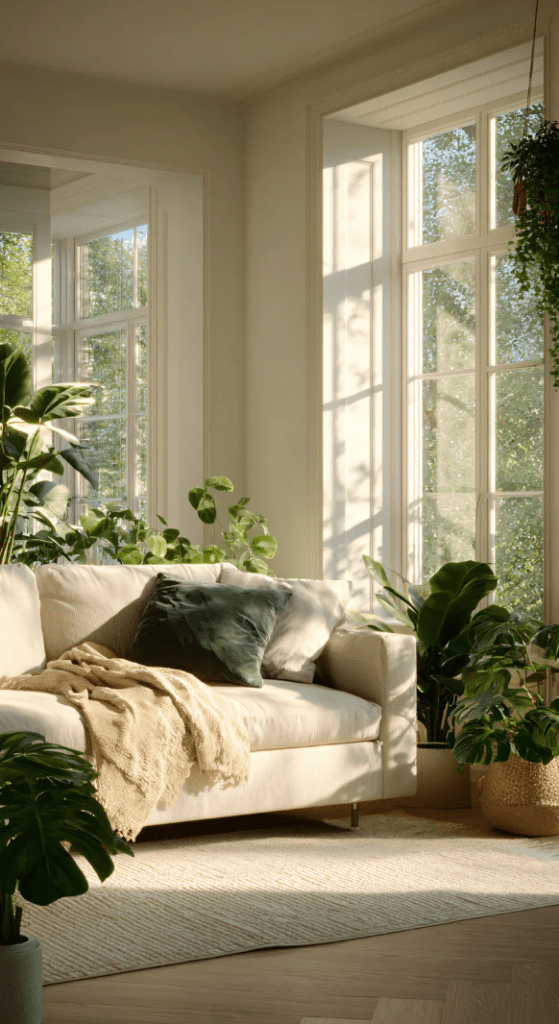
Nature has a grounding effect on our nervous systems, and inviting it into your home doesn’t require new decor.
Simple ways to connect with nature include:
- Opening windows for fresh air
- Letting sunlight into rooms whenever possible
- Bringing in plants you already own
- Stepping outside briefly to reset during the day
Final Thoughts: Calm Is a Feeling, Not a Look
Creating a calm home isn’t about aesthetics or trends—it’s about how your space supports your daily life and emotional well-being.
By using what you already have, reducing excess, and focusing on gentle rhythms instead of constant improvement, you can create a home that feels grounded, peaceful, and deeply supportive.
And the best part? You don’t need to buy a single thing.
Check out these related articles and resources to help you on your mindful and sustainable journey:

Hi, I’m Christine — a nature-loving mom on a journey to live more sustainably and mindfully.
Through the ups and downs of parenting, I’ve found peace in mindfulness, meditation, and conscious living. Now, I share simple tips for mindful parenting, sustainable choices, and creating a sense of calm in everyday family life.
No responses yet