How to host a low-waste holiday dinner that still feels festive and full of heart.

The holidays are full of love, laughter, and delicious meals; but they’re also one of the most wasteful times of year. From mountains of plastic packaging to leftovers that never get eaten, it’s easy to feel a little uneasy when the trash bags start piling up after a beautiful celebration.
But here’s the truth: hosting sustainably doesn’t mean giving up the joy or beauty of the holidays. It means celebrating more intentionally. With purpose, gratitude, and care for the planet that sustains all that abundance.
Over the past few years, I’ve slowly shifted our family dinners to be more mindful. Less plastic wrap, more real dishes, less excess, more connection. What surprised me most wasn’t how little waste we created, but how much calmer and more meaningful the whole experience felt.
In this guide, I’ll walk you through simple, thoughtful ways to host a low-waste holiday dinner that still feels festive and full of heart. 🌿
✨ Free resource: Don’t miss the Sustainable Holiday Meal Planner printable — it’ll help you organize your menu, shop seasonally, and plan how to use up every last bite.

1. Plan with Purpose: Mindful Menu & Guest Prep
Hosting sustainably starts before you step foot in a grocery store. The biggest source of holiday food waste? Overbuying and over-preparing.
Plan Your Portions
Be realistic about how much people will actually eat. Use a simple rule of thumb:
- 1–1.5 servings of protein per person
- 2–3 sides total (not five versions of potatoes)
- Smaller desserts, but more variety
If you know your guests’ appetites, adjust accordingly. I once made a triple batch of roasted carrots because “they looked small raw”, and we still had more than enough carrots three days later. Lesson learned!
Create Ingredient Overlap
Plan dishes that share ingredients. For example:
- Fresh herbs can be used in stuffing, sauces, and roasted veggies.
- Root vegetables can stretch across multiple sides.
- Homemade broth can come from leftover veggie scraps.
Communicate Ahead
Ask guests about dietary restrictions and how much they plan to bring. This avoids duplicate dishes or food that doesn’t get eaten.
Mindful tip: Before finalizing your menu, take a deep breath and picture your table full; of food and laughter. It’s about connection, not quantity.
Check out Love Food Hate Waste for portion planning tools.

2. Shop Smart: Sustainable Ingredient Sourcing
Shopping can be one of the most mindful parts of the process, if you slow down and choose intentionally.
Buy local and seasonal
Not only does it reduce your carbon footprint, but local produce often tastes better and lasts longer. In November–December, look for:
- Root vegetables (carrots, beets, potatoes)
- Squash and pumpkins
- Brussels sprouts, kale, or cabbage
- Apples, pears, and cranberries
Bring your own bags and containers
Reusable produce bags, jars, and totes make a huge difference. I keep two reusable insulated bags in the trunk of my car, so I never forget mine!
Choose eco-friendly beverages
Look for organic or local wines and ciders. Bonus points for glass bottles with corks instead of plastic tops.
Mindful tip: Slow down while shopping. Touch the produce, breathe in the scents, and connect with gratitude for where your food came from.
Check out my free Seasonal Produce Shopping Guide to always know what’s in season!

3. Cook Consciously: Waste Less in the Kitchen
Once you’re home, this is where the magic (and mindfulness) really happens.
Save your scraps
Keep a bowl for veggie peels, stems, and ends while prepping. Simmer them later into a flavorful broth, or compost them when done.
Use real dishes and cloth towels
Skip disposable foil trays and paper towels. Cloth napkins and reusable dishcloths add warmth and style.
Store efficiently
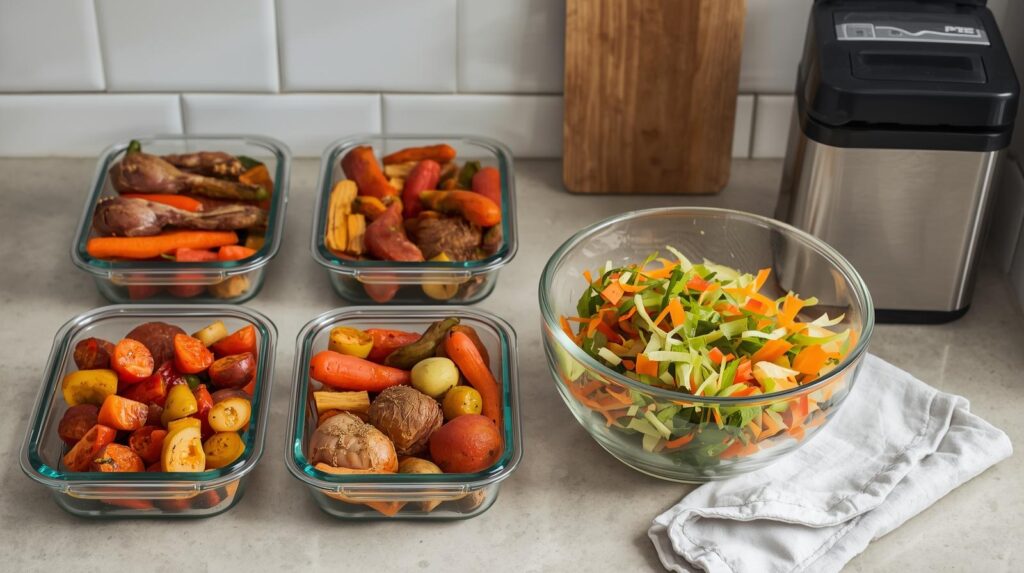
Use glass containers or beeswax wraps instead of plastic wrap. Label leftovers by date to actually use them.
Cook collaboratively
Let kids or family members help chop, stir, or set the table. It makes the experience slower, more connected, and surprisingly more enjoyable.
Mindful tip: Notice the smells, textures, and sounds as you cook. You’re creating nourishment, not just food!
Check out my free Produce Storage Guide to always keep your fruits and veggies tasting their best!

4. Set the Scene: A Beautiful, Eco-Friendly Table
A sustainable table can be absolutely stunning. Nature already provides everything you need.
Décor ideas:
- Use natural materials like evergreen branches, pinecones, or dried citrus garlands.
- Repurpose glass jars as candleholders.
- Layer neutral linens or mix cloth textures for warmth.
- Skip glitter and plastic — they shed microplastics that harm waterways.
Encourage reusables
Invite guests to bring their own containers for leftovers. You can even make it fun by decorating a “leftover station” with little labels or twine tags.
Add meaning
Begin the meal with a gratitude moment — a short reflection, prayer, or mindful breath together. It’s a grounding way to shift the focus from perfection to presence.

5. Mind the Leftovers: Love Your Food Twice
After the meal, it’s easy to let food waste sneak back in. A few small habits can make all the difference.
Store smartly
Use clear containers so you actually see what’s inside. Freeze portions you won’t eat within three days.
Reinvent meals
Get creative with what’s left:
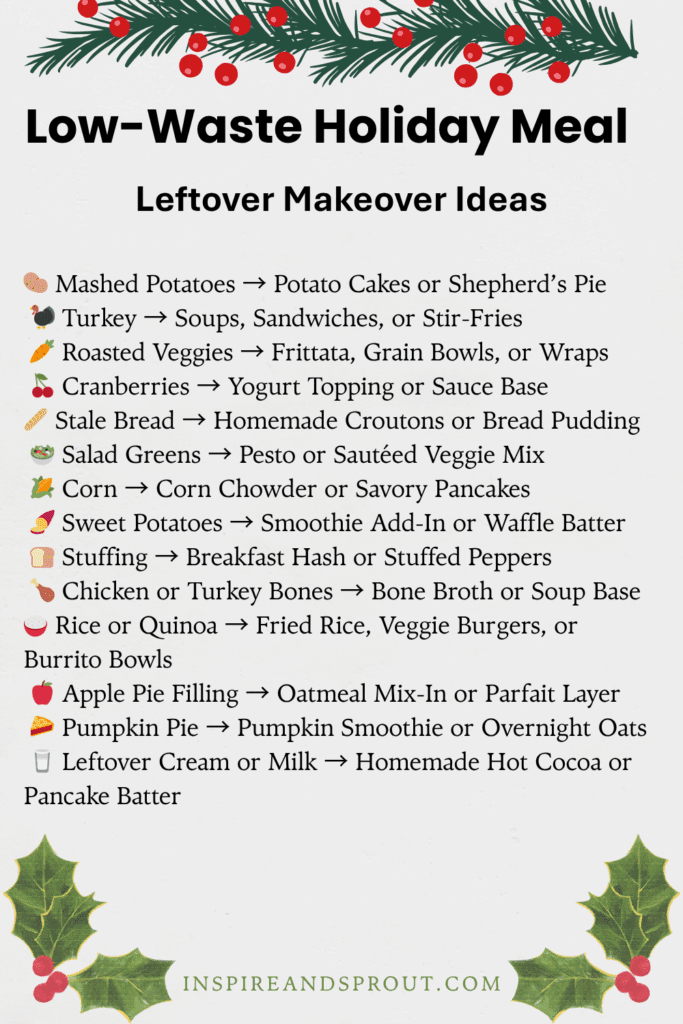
- Mashed potatoes → potato cakes
- Turkey → soups or sandwiches
- Roasted veggies → frittata or grain bowls
- Cranberries → yogurt topping or sauce base
Compost what you can’t reuse
Even small amounts of composting prevent methane emissions and nourish soil for next year’s meals.
Mindful tip: Take a pause before cleanup. Notice the fullness of your heart, not just your plate.
Check out EPA’s Food Recovery Hierarchy for composting and donation information!
6. Share the Spirit: Inspire Guests to Join In
Sustainability spreads through example, not pressure.
- Mention the local farm or store where you bought your produce.
- Share a quick story about why you’re trying a low-waste holiday this year.
- Print leftover recipe cards for guests to take home.
- If someone loves your table setup, tell them how simple and natural it really was.
Over time, these small moments plant seeds for others to try it too.
Joy Without Excess
Sustainability isn’t about restriction; it’s about intentional abundance. When you waste less, you notice more. The laughter, the flavors, the connection, they all stand out.
This holiday season, celebrate fully, waste less, and let your meal reflect what truly matters: gratitude, presence, and care.
✨ Grab your free Sustainable Holiday Meal Planner to make this process stress-free and joyful.
FAQs About Hosting a Low-Waste Holiday Dinner
1. How can I host a sustainable holiday dinner on a budget?
Start with what you already have — dishes, decorations, containers. Buy seasonal produce (it’s usually cheaper) and plan your portions carefully to avoid waste. Sustainability and savings often go hand in hand.
2. What are some easy swaps for eco-friendly holiday hosting?
Use real dishes instead of disposable ones, cloth napkins instead of paper, and beeswax wraps or glass containers instead of plastic wrap. Repurpose jars as drink glasses or vases.
3. How can I make guests comfortable with bringing reusable containers?
Frame it playfully — call it your “leftover love station.” Most people appreciate the practicality once they realize how much food goes home instead of the trash.
4. What if my family isn’t on board with sustainability changes?
Lead by example. Start small and highlight the beauty and simplicity of what you’re doing — like your natural table décor or delicious leftover recipes. Over time, they’ll come around.
5. How do I compost during the holidays?
Keep a countertop bin or large bowl handy for scraps. You can use a backyard compost, a municipal service, or even drop scraps at local farmers’ markets that accept compost donations.
Check out these other related articles and resources to help you on your mindful and sustainable journey:

Hi, I’m Christine — a nature-loving mom on a journey to live more sustainably and mindfully.
Through the ups and downs of parenting, I’ve found peace in mindfulness, meditation, and conscious living. Now, I share simple tips for mindful parenting, sustainable choices, and creating a sense of calm in everyday family life.
No responses yet