
Mornings can feel chaotic, especially when you’re balancing kids, work, and household responsibilities. But even a few mindful moments can set the tone for a calmer, more connected day. These 10 practical, quick habits help busy parents reduce stress, connect with their kids, and start the day intentionally.
Whether you’re a working parent, homeschooling, or simply trying to survive the morning rush, these habits are designed to fit seamlessly into your routine. Even adding just 1 or 2 to your morning time can set you up for a more intentional day.
Start With a 1-Minute Mindful Breath
Right when you wake up in the morning, or with the first hour, try to take a one-minute pause for yourself to get yourself ready for the day ahead. Simply sit or stand comfortably, inhale slowly through your nose, exhale gently through your mouth — repeat for 1 minute.
Benefits:
Mindfulness doesn’t have to mean carving out a half-hour for meditation. Sometimes, even one mindful minute can create a meaningful shift in your day. These micro-practices are easy to fit into busy schedules and offer powerful benefits when practiced consistently.
Quick Stress Relief
Taking a minute to focus on your breath helps calm your nervous system and lower stress levels. For example, pausing before a big meeting or after a toddler meltdown to inhale slowly and exhale fully can help you respond instead of react.
Improved Focus
A one-minute mindful reset clears away mental clutter so you can return to the task at hand with more clarity. Try it before sitting down to work, cooking dinner, or even folding laundry—you’ll feel more present and efficient.
Accessible Anywhere
No special tools or quiet room required. You can practice one-minute mindfulness while standing in line, waiting at a red light, or even brushing your teeth. These moments of presence add up throughout the day.
Builds Consistency
Practicing mindfulness in small, manageable doses makes it easier to form a lasting habit. Over time, those mindful minutes become second nature and expand into longer practices naturally.
Better Presence
Even brief mindfulness helps you feel more connected with yourself and the people around you. A single minute of intentional breathing before greeting your kids after school can shift the energy of the entire afternoon.
In short: one-minute mindfulness is a simple yet powerful way to reduce stress, boost focus, and bring calm and intention into everyday life. When ready, check out my 5-Minute Mindfulness Guide to easily add in whenever you can. Try this practice with your child, modeling mindfulness when kids are young is a great way for them to naturally learn how to regulate their emotions.

2. Practice Gratitude at Meals
Share one thing you’re grateful for while eating breakfast, snacks, lunch or dinner. Invite your child to do the same. Taking a pause and sharing a positive moment of gratitude together can help make mealtimes less stressful and remind us not to rush through mealtimes. Even just taking a moment to talk about the food, how it tastes, its temperature, texture, etc. is a great way to incorporate a mindful pause for those too young to understand gratitude.
Benefits:
- Promotes a positive mindset for the entire family
- Encourages kids to notice small blessings
- Reduces mealtime stress and negativity
My toddler’s daycare has an adorable saying before they eat their meals, something along the lines of “We wish for happiness, peace, and love for all the children, all around the world. I am thankful for this food. Now we can eat.” She even repeats this at home which is how we learned about it. I love this simple yet mindful way of pausing and sending out love and gratitude at each meal. For more daily mindfulness hacks, be sure to check out my 21-Day Mindful Parenting Challenge.

3. Mindful Morning Movement
Starting your day with mindful movement is one of the simplest ways to set a positive tone for the hours ahead. Instead of jumping straight into emails, chores, or rushing the kids out the door, take 2–5 minutes to gently wake up your body through stretching, yoga, or even walking around the house with intention. The key is awareness: notice how your body feels as you move, pay attention to your breath, and allow yourself to ease into the day rather than rushing into it.
Actionable Step: Choose one mindful movement each morning. Perhaps a few yoga poses, a slow stretch toward the ceiling, or a short walk around the kitchen or yard. As you do this, focus on the sensations in your muscles, your breathing rhythm, and how your body gradually feels more awake.
Benefits of Mindful Morning Movement
- Boosts energy and focus naturally: Light movement stimulates circulation and oxygen flow, giving you a gentle energy lift that coffee alone can’t provide. This helps you feel more focused and ready to take on the day.
- Releases tension from sleep: Many people wake up with stiffness in the back, shoulders, or hips after a night of rest. Stretching or yoga helps release that tension, reducing discomfort and improving posture.
- Creates mindful family habits: If you have kids, mindful movement can become a shared ritual. Children love to imitate stretches, balance poses, or silly walks. Introducing them to mindful movement early not only helps them burn off morning energy but also teaches them to connect with their bodies in a healthy, aware way.
By beginning your mornings with just a few minutes of intentional movement (maybe 2 minutes before you walk out the door each morning), you set a foundation of calm energy, focus, and presence that carries through the rest of your day. It’s a small but powerful habit that supports both your well-being and your family’s. For more tips, check out this article on Morning Routines That Improve Your Physical and Mental Health.
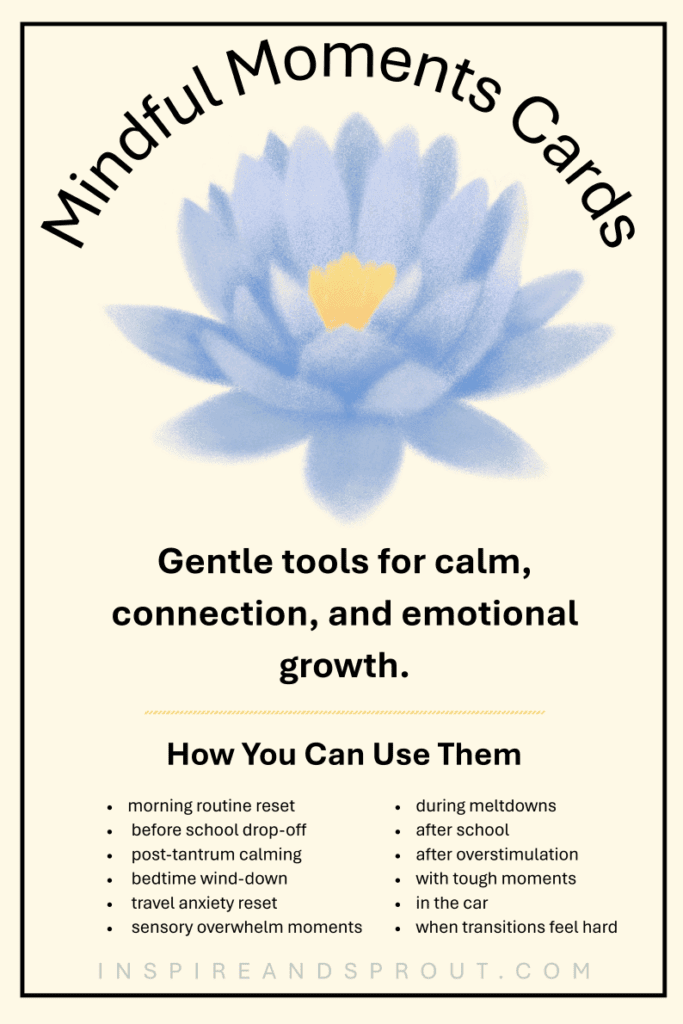
For quick, guided mindfulness moments for kids, check out my Mindful Moments Card Deck for Kids.
4. Connect Before Screens
In today’s world, it’s easy to let screens take over first thing in the morning: phones buzzing with notifications, kids asking for cartoons, or the temptation to scroll while sipping coffee. But taking just a few minutes to connect with your child before any screen time can make a world of difference. This intentional pause creates space for presence, grounding, and genuine connection at the start of the day.
Actionable Step: Dedicate 3 minutes each morning to interacting with your child without any phones, tablets, or TV. This could be as simple as a warm hug, a short conversation about what they’re excited for that day, or a playful moment like a silly dance or game of peek-a-boo. The key is giving your child your full attention, even if only for a few minutes.
Benefits of Connecting Before Screens
- Strengthens emotional bonds: When kids feel truly seen and heard first thing in the morning, they start the day with a stronger sense of security and love. This builds resilience and emotional well-being over time.
- Reduces distracted parenting: Without screens competing for your focus, you’re able to be fully present with your child. This models mindful behavior and shows them that human connection matters more than digital distraction.
- Sets a tone of presence for the day: A mindful start helps the whole family carry more calm, focus, and awareness into the rest of the day; whether it’s heading off to school, work, or family activities.
Making screen-free connection a morning ritual doesn’t take long, but it creates a ripple effect of presence, patience, and warmth that can shape your entire day.

5. Plan Your Day Intentionally
Mornings often feel rushed and chaotic, especially for parents juggling multiple responsibilities. Taking just a couple of minutes to clarify what matters most can shift your entire day. By setting your top three priorities early on, you create a sense of direction and reduce the mental clutter that leads to stress. Including at least one self-care or mindful activity ensures that you are not only productive but also caring for your own well-being.
Actionable Step: Spend 2 to 3 minutes each morning identifying your top three priorities for the day. Write them down in a notebook, planner, or even on your phone. Make sure one of these priorities is a mindful practice or self-care activity, such as a walk outside, five minutes of deep breathing, or enjoying a quiet cup of tea. Be as specific as possible, even putting specific times of the day you know you should be able to complete these activities.
Benefits of Setting Daily Priorities
- Prevents overwhelm: When you know what your top goals are, you can focus your energy more effectively and avoid feeling pulled in too many directions.
- Creates a sense of purpose: Clear priorities give structure to your day, helping you feel grounded and intentional instead of reactive.
- Encourages intentional parenting: Including family-related priorities helps you align your actions with your values, so your parenting reflects mindfulness and presence rather than just going through the motions.
Starting your day with a few clear priorities keeps you focused, purposeful, and balanced, both as a parent and as an individual. Check out these 3 key lessons from Atomic Habits.
6. Mindful Coffee or Tea Moment
Many mornings begin with rushing through coffee or tea while multitasking, but turning this everyday moment into a mindful ritual can completely shift your mood. Instead of grabbing your drink on the go or scrolling your phone while sipping, slow down and fully experience the moment. Paying attention to the warmth, aroma, and taste of your favorite morning drink helps you start the day grounded, calm, and present.
Actionable Step: Take 2 to 5 minutes to enjoy your coffee, tea, or other morning beverage slowly. Notice the smell as it rises, the way the cup feels in your hands, and the flavors as you sip. Put your phone aside and give yourself permission to simply be in the moment.
Benefits of Savoring Your Morning Drink
- Cultivates a calm start: Beginning your day with a quiet, mindful ritual reduces stress and sets a peaceful tone before the busyness begins.
- Encourages presence: Focusing on sensory details helps train your mind to stay in the moment instead of jumping ahead to your to-do list.
- Creates a personal ritual: Even on the busiest mornings, this small practice becomes a grounding routine that belongs just to you.
By turning your morning drink into a mindful pause, you create a daily anchor that supports both calm and clarity throughout the day.

7. Affirmations for You & Your Kids
Starting the day with a positive statement can be a powerful way to shift your family’s mindset. Affirmations are simple phrases that reinforce confidence, kindness, and calm. When spoken aloud, they help both adults and children set the tone for the day ahead. Saying affirmations together as a family builds connection while also teaching kids the importance of self-talk and resilience.
Actionable Step: Choose one short affirmation each morning and say it aloud with your child. Examples include “I am calm,” “I am kind,” or “Today will be a good day.” Keep it simple and repeat it together so that it feels natural and encouraging.
Benefits of Morning Affirmations
- Builds a positive mindset: Starting the day with uplifting words helps shift focus away from stress and toward possibility.
- Encourages healthy self-talk in children: Kids who practice affirmations learn to replace negative thoughts with supportive and empowering ones.
- Increases confidence and resilience: Repeating affirmations regularly helps strengthen self-belief, which supports children and parents in facing challenges throughout the day.
Personally, I have a kind of mantra that I like to repeat to myself, focusing on the things that matter most to me. For example, “I lead with love and peace. I am present and connected. I attract and exude love, calm, and patience. I release and repel all negativity, anger, and impatience.”, etc. I focus on these sentences for at least one minute while taking deep, intentional breaths and trying to relax my body fully. This can also easily be done while walking or driving if you forget first thing in the morning or want to add it in in a few times throughout your day. By adding a short affirmation to your morning routine, you create a habit of positivity that supports both your well-being and your child’s growth.
8. Limit Tech
Screens are a constant part of modern life, and while they offer convenience, they also bring distraction and stress. Whether it is social media, endless emails, or breaking news alerts, constant exposure to digital input can overwhelm your mind and pull you away from what matters most. By setting intentional screen-free times throughout the day, you can reduce stress, reconnect with loved ones, and give yourself mental breathing room.
Actionable Step: Choose a specific window of time each day to stay away from social media, email, or news. Even just 30 minutes of screen-free time allows you to focus on mindful routines or quality family connection. You might try screen-free meals, an evening walk without your phone, or a midday break to recharge without digital distractions.
Benefits of Screen-Free Spaces
- Reduces stress from information overload: Limiting your exposure to constant updates and notifications helps your nervous system stay calm and balanced.
- Encourages connection before distraction: Without screens in the way, you can be fully present with family, friends, or even yourself.
- Supports mental clarity: Stepping back from digital input allows your brain to reset, improving focus, creativity, and problem-solving.
Creating screen-free spaces during the day does not require a complete digital detox. Small, intentional breaks can help you cultivate presence, strengthen relationships, and protect your mental well-being. For more information, check out this study on the hazards of excessive screen time.
9. Mindful Dressing
Getting dressed is something we all do every day, but it is often rushed and stressful; especially when kids are involved. Turning this daily task into a mindful practice can transform chaotic mornings into calmer, more intentional moments. By paying attention to textures, colors, and how clothing feels on the body, both you and your child can start the day with more awareness and ease.
Actionable Step: As you get yourself dressed, treat the process as a small act of self-care. Notice the fabrics against your skin, the colors you choose, and how each piece makes you feel. When helping your child get dressed, involve them in the process by letting them pick between two outfits or talk with them about how the clothing feels—soft, warm, or comfortable. This not only teaches body awareness but also encourages independence.
Benefits of Mindful Dressing
- Turns routine into a mindful practice: Dressing becomes more than a task on the checklist; it becomes an opportunity to slow down and connect.
- Encourages attention to sensory details: Focusing on textures, colors, and how clothing feels helps both adults and children develop greater body awareness.
- Promotes calm transitions: Instead of rushed or stressful mornings, mindful dressing creates a smoother and more peaceful start to the day for the whole family.
By treating dressing as both a mindful parenting practice and a moment of self-care, you can shift this everyday routine into a grounding ritual that supports calm, confidence, and presence.

10. Reflect & Reset if Needed
Mindfulness does not have to be reserved for mornings or long meditation sessions. Sometimes the most powerful practices are the simplest ones you can weave into busy days. A short pause to check in with yourself offers a reset that prevents stress from piling up and helps you return to your responsibilities with more clarity and calm.
Actionable Step: Mid-morning or anytime you feel tension building, pause for 1 to 2 minutes. Close your eyes if possible, take a few slow breaths, and notice how you are feeling in the moment. Ask yourself, “What is my mood right now?” and gently reset your intentions if you find yourself rushing, frustrated, or distracted.
Benefits of a Mini Mindful Pause
- Prevents stress accumulation: Small breaks allow your body and mind to reset before stress builds into overwhelm.
- Builds self-awareness: Checking in with your breath and emotions helps you recognize patterns and respond more intentionally.
- Models mindfulness for kids: When children see you pausing to breathe and reset, they learn that mindfulness is a healthy and natural way to handle emotions.
These mini pauses act as gentle reminders throughout the day, helping you return to calm presence no matter what challenges arise.
Easily Bring Mindfulness Into Your Day
Implementing even just a few of these mindful habits can completely transform the tone of your morning or day and set a positive tone. By taking small, intentional actions such as mindful movement, connecting with your child, or savoring your morning drink, you create space for calm, presence, and connection. Mindfulness is not about doing everything perfectly or following a rigid routine. It is about noticing, pausing, and choosing small meaningful shifts that make life more joyful for you and your family.
What To Do Next:
- Try one or two habits from this list this week and notice how your mornings feel different.
- For deeper guidance and support, explore our 5-Minute Mindfulness Guide or join the 21-Day Mindful Parenting Challenge to create consistent calm routines that last.
Starting small is the key. Each mindful moment you add to your day helps you build lasting calm, strengthen your connection with your children, and approach parenting with greater awareness and intention.
Want to read more? Check out these related posts below:

Hi, I’m Christine — a nature-loving mom on a journey to live more sustainably and mindfully.
Through the ups and downs of parenting, I’ve found peace in mindfulness, meditation, and conscious living. Now, I share simple tips for mindful parenting, sustainable choices, and creating a sense of calm in everyday family life.
10 Responses
[…] 10 Easy Mindful Habits for Busy Parents […]
[…] Simple, Sustainable Ways to Bring Calm Into Everyday LifeHow Mindful Parenting Can Change Your Life10 Easy Mindful Habits for Busy Parents🌱 Easy Mindful & Sustainable Activities for Babies, Toddlers, and Kids Using […]
[…] Ultimate Guide to Eco-Friendly Baby Meal Prep (Sustainable & Easy!)The Ultimate Guide to Baby Food Purees: Yields, Prep Tips, and Safe Homemade Recipes10 Easy Mindful Habits for Busy Parents […]
[…] How to Reduce Waste with Homemade Baby Food🌱 Easy Mindful & Sustainable Activities for Babies, Toddlers, and Kids Using Recyclables10 Easy Mindful Habits for Busy Parents […]
[…] 10 Easy Mindful Habits for Busy Parents10 Surprising Sustainable Habits You Didn’t Know About […]
[…] Sustainable Swaps for ParentsHow to Handle a Strong-Willed Toddler Mindfully: A Complete Guide10 Easy Mindful Habits for Busy ParentsGuided Mindfulness Activities for Parents & Kids: Simple, Sustainable Ways to Bring Calm Into […]
[…] Life🌱 Easy Mindful & Sustainable Activities for Babies, Toddlers, and Kids Using Recyclables10 Easy Mindful Habits for Busy ParentsThe Ultimate Guide to Baby Food Purees: Yields, Prep Tips, and Safe Homemade […]
[…] Guide🌱 Easy Mindful & Sustainable Activities for Babies, Toddlers, and Kids Using Recyclables10 Easy Mindful Habits for Busy ParentsGuided Mindfulness Activities for Parents & Kids: Simple, Sustainable Ways to Bring Calm Into […]
[…] Activities for Parents & Kids: Simple, Sustainable Ways to Bring Calm Into Everyday Life10 Easy Mindful Habits for Busy ParentsHow to Handle a Strong-Willed Toddler Mindfully: A Complete […]
[…] Activities for Parents & Kids: Simple, Sustainable Ways to Bring Calm Into Everyday Life10 Easy Mindful Habits for Busy Parents🌱 Easy Mindful & Sustainable Activities for Babies, Toddlers, and Kids Using […]