
The grocery store meltdown. The bedtime battle. The shoes that suddenly feel all wrong.
If you’re raising a toddler, chances are you’ve faced one (or all) of these moments — complete with tears, flailing arms, and maybe even a few judgmental stares from strangers.
Toddler tantrums are normal, but that doesn’t make them any less exhausting for us parents. When this started seemingly out of nowhere for me, I easily felt overwhelmed, embarrassed, and even triggered when my child lost control. The good news? There is a calm, constructive way to respond — one that helps your child feel seen and supported; while also keeping you grounded in the moment.
In this post, we’ll explore why tantrums happen, and I’ll walk you through a mindful parenting framework you can lean on the next time emotions boil over. With practice, these steps can transform meltdown moments into opportunities for connection and growth.
Why Tantrums Happen
Before we can respond mindfully, it helps to understand what’s actually going on inside a toddler’s brain during a tantrum. Tantrums are not a sign that your child is “bad” or that you’re doing something wrong as a parent — they’re a completely normal part of development. In fact, tantrums are one of the main ways toddlers communicate big feelings they don’t yet have the words for. By reframing tantrums as a form of communication rather than misbehavior, we can respond with more patience and empathy.
The Brain Science (Simplified)
Toddlers are still developing the part of the brain responsible for logic, self-control, and reasoning — the prefrontal cortex. At the same time, the emotional part of the brain (the amygdala) is highly active. That means when your toddler feels frustrated, tired, or disappointed, their “emotional brain” takes over, and their “thinking brain” isn’t strong enough yet to calm them down on its own. If you want to learn more check out this helpful resource: Temper Tantrums: What They Are and How to Handle Them.
In short: tantrums aren’t manipulative. They’re your child’s way of showing, “My feelings are bigger than I can handle right now.”
This was really helpful for me when I found myself feeling anxious and frustrated as my toddler incessantly whined and cried over every. Little. Thing. There’s something they need, and they don’t know how to tell us. It’s up to us to figure it out and be a safe space for them to work through big emotions.
Common Triggers
While every child is unique, tantrums often spring from predictable causes:
- Hunger or fatigue – a tired or hungry child has a much lower tolerance for frustration.
- Overstimulation – loud, busy, or unfamiliar environments can overwhelm toddlers.
- Transitions – stopping play to leave the house, going to bed, or shifting activities can spark resistance.
- Limits and boundaries – when children hear “no,” it can feel like a huge loss of control.
- Needing connection – they want to feel secure and connected to their caregivers and need simple moments of understanding and connection daily.
Understanding these triggers won’t prevent every tantrum, but it can help you anticipate and prepare for them more calmly.

A Mindful Tantrum Response Framework
So what do you do when a tantrum erupts? Instead of reacting on autopilot (yelling, bribing, or shutting down), this framework offers a step-by-step mindful response.
1. Pause & Breathe
Your child’s emotions may be running high, but the first step is to regulate yourself. Take a slow breath in through the nose, out through the mouth. Remind yourself: This is a normal part of development. My calm will help my child find calm.
By pausing, you give yourself space to respond thoughtfully instead of reacting out of frustration.
Once I started this simple step my toddler noticed. We have been practicing “taking a deep breath”, and when I take one, she responds, “mommy take a deep breath!” She is learning from my example.
2. Acknowledge Feelings
Toddlers want to feel understood, even if they don’t get what they want. Use validating phrases like:
- “I can see you’re really upset about leaving the playground.”
- “You’re angry because you wanted the blue cup.”
Validation doesn’t mean giving in. It simply shows your child you recognize their experience. This alone can start to reduce the intensity of their feelings.
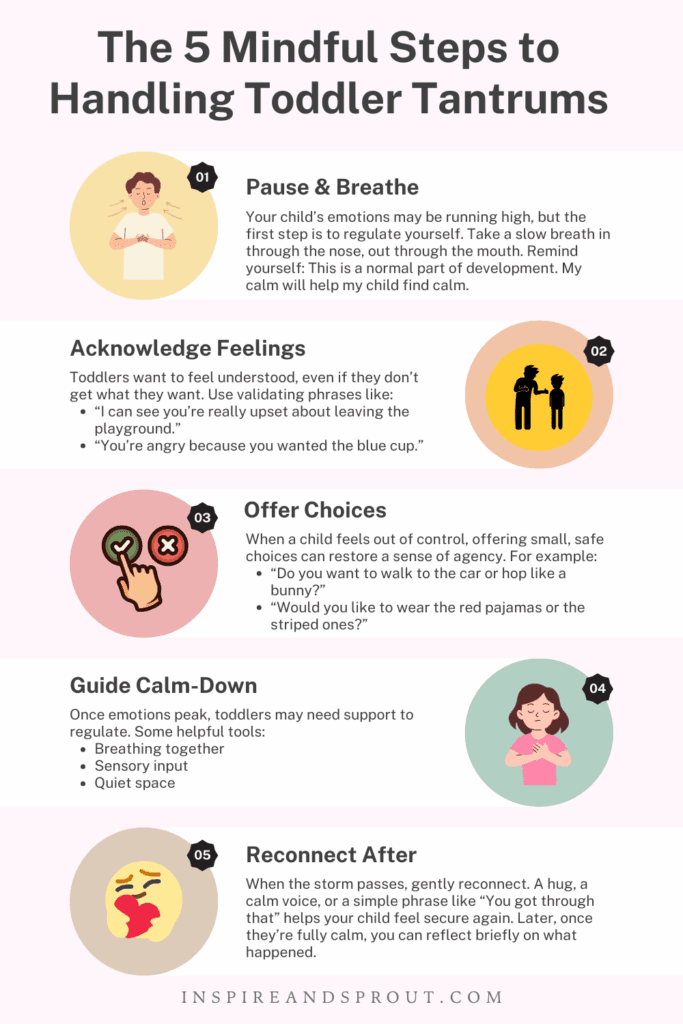
3. Offer Choices
When a child feels out of control, offering small, safe choices can restore a sense of agency. For example:
- “Do you want to walk to the car or hop like a bunny?”
- “Would you like to wear the red pajamas or the striped ones?”
- “Do you want to put your shoes on by yourself or do you want me to put them on for you?” (my toddler will eventually ask for help when she can’t get them on, but always chooses the “by yourself” option first).
Choices don’t remove limits, but they help your child feel more involved in the process.
4. Guide Calm-Down
Once emotions peak, toddlers may need support to regulate. Some helpful tools:
- Breathing together – invite them to “smell the flowers, blow the bubbles.”
- Sensory input – offer a favorite stuffed animal, fidget toy, or blanket. Hugs and kisses work well, too!
- Quiet space – guide them to a cozy nook or safe corner until they’re ready to re-engage.
The goal isn’t to stop the tantrum instantly, but to create an environment where your child can move through their feelings safely.
5. Reconnect After
When the storm passes, gently reconnect. A hug, a calm voice, or a simple phrase like “You got through that” helps your child feel secure again. Later, once they’re fully calm, you can reflect briefly on what happened:
- “You were really mad when it was time to leave, but you calmed down by taking breaths. I’m so proud of you! Let’s keep practicing that together.”
This teaches self-awareness and problem-solving without shaming. Honestly, I often need to use some of these responses myself when emotions run high. I’ll acknowledge when I’m feeling overwhelmed or frustrated, take a deep breath, and remind myself to step away and take a break when I can. Half the time I even ask for a hug to calm myself down—luckily, this works for my toddler too! The more I support my own well-being, the more I’m able to show up for others.

What to Avoid
Even with the best intentions, certain responses can make tantrums harder in the long run.
- Shaming or dismissing feelings – phrases like “Stop crying, it’s not a big deal” invalidate your child’s emotions. Over time, this can discourage healthy emotional expression.
- Giving in to end the meltdown – handing over the candy or letting them skip brushing teeth may stop the tantrum now, but it reinforces the behavior. Your child learns, “If I scream long enough, I’ll get what I want.”
- Overreacting – yelling, threatening, or punishing harshly can escalate the situation. It also models the very behavior (losing control) that we’re asking children not to do.
Mindful parenting doesn’t mean being perfect. It means noticing when we slip into these patterns, offering ourselves compassion, and trying again next time.
Extra Tools for Tantrum Survival
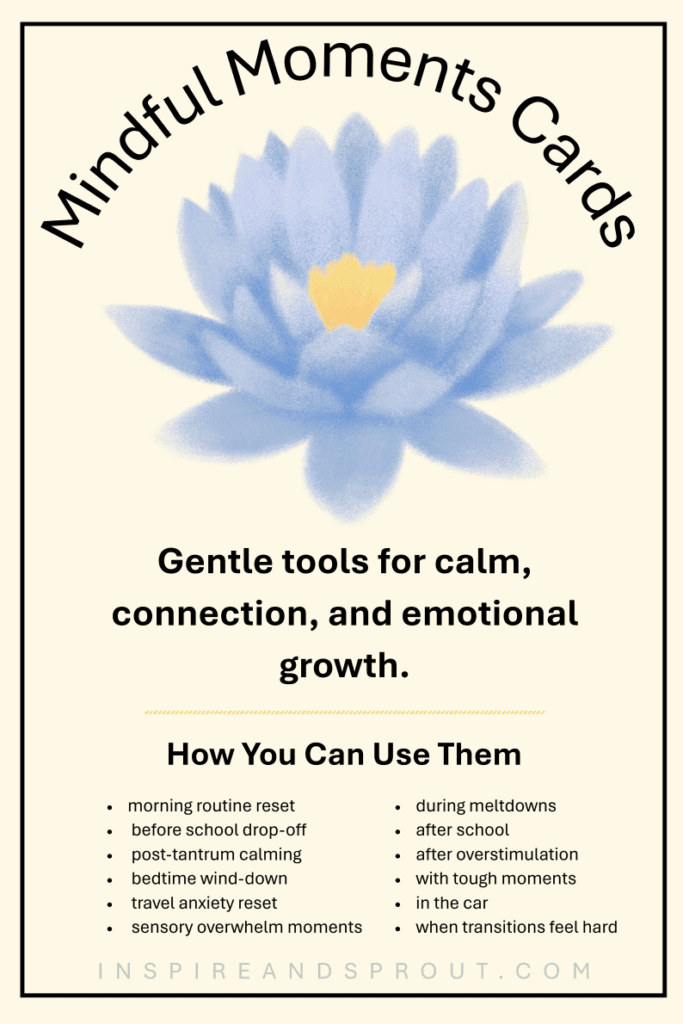
Create a Calm-Down Kit
Having a few tools ready can make it easier to guide your child through big feelings. Some eco-friendly, sustainable options include:
- Organic cotton stuffed animal – a comfort object that’s safe and soft.
- Wooden or silicone sensory toys – natural textures for fidgeting.
- Reusable water bottle – sometimes a sip of water can help reset.
- Mini picture book – a calming story to redirect focus.
Keep the kit in a small basket or bag you can grab quickly at home or on-the-go.
Support Yourself, Too
Handling tantrums is demanding — and your ability to stay calm depends on your own well-being. Mindful self-care doesn’t have to be elaborate:
- Take three slow breaths before responding.
- Repeat a grounding mantra like “I choose connection over control” or “Breathe in presence and patience, breathe out frustration and tension.”
- Do a short meditation or stretch when you feel tension rising.
- Ask for help from someone you trust to step in so you can take a break. We don’t have to do it all and need to learn to ask for help when we need it. Even a few short moments to breathe and reset can make a huge difference!
The more regulated you are, the more effectively you can co-regulate with your child.
Closing Thoughts
Toddler tantrums can feel overwhelming, but they’re also opportunities: for children to learn emotional regulation, and for parents to practice patience, presence, and compassion. By pausing, validating, guiding, and reconnecting, you create a safe space for your child to grow — and for your bond to deepen.
Remember: you don’t have to handle every tantrum perfectly. What matters is showing up consistently with love and intention.
If you’d like a simple way to ground yourself in the middle of daily parenting chaos, I created a 21-Day Mindful Parenting Challenge. It’s a way to incorporate mindful parenting and make it a lasting habit.
And if you’re looking for more support, check out my other posts on mindful parenting. You don’t have to walk this journey alone.
For mindfulness strategies that help during tough parenting moments, explore Greater Good Science Center’s resources.
Check out these other articles and resources to continue on your mindful and sustainable journey:

Hi, I’m Christine — a nature-loving mom on a journey to live more sustainably and mindfully.
Through the ups and downs of parenting, I’ve found peace in mindfulness, meditation, and conscious living. Now, I share simple tips for mindful parenting, sustainable choices, and creating a sense of calm in everyday family life.
3 Responses
[…] How to Mindfully Handle Meltdowns and Tantrums (Even Under Age 2!) […]
[…] How to Mindfully Handle Meltdowns and Tantrums (Even Under Age 2!) […]
[…] Mindful Parenting Can Change Your LifeHow to Mindfully Handle Meltdowns and Tantrums (Even Under Age 2!)How to Handle a Strong-Willed Toddler Mindfully: A Complete GuideGuided Mindfulness Activities for […]